
Written by Frihat Lawyers & Legal Consultants
Introduction
The principle that a judge cannot rule based on personal knowledge is a cornerstone of criminal justice and a fundamental guarantee of a fair trial. No matter how informed or convinced a judge may be, their ruling must be based solely on the evidence presented in the case file, discussed openly between the parties, and in accordance with legally prescribed procedures.
This principle not only protects the parties but also safeguards the judiciary itself from becoming an unchecked discretionary power, ensuring that a judgment reflects impartial application of the law rather than personal conviction.
I. The Essence and Limits of the Principle
The default position is that a judge is not a witness in the case and must not incorporate personal knowledge into their judgment. If the judge possesses prior knowledge of the incident, they must choose one of two options:
- Recusal from the case to preserve impartiality.
- Completely disregarding this knowledge, refraining from relying on it either explicitly or implicitly in the ruling.
Any deviation from this undermines the legal validity of the judgment, reducing it to personal opinion rather than judicial decision.
II. The Danger of Ruling Based on Personal Knowledge – Analytical Example
To illustrate the danger of this approach, consider this common hypothetical:
Imagine a judge who witnesses a murder from the window of their home, and later the same case comes before them. If the judge were to convict based on what they saw, without evidence formally submitted in the case file, the judgment would rest on unverifiable personal conviction.
How can we be certain that what the judge saw was the full truth? What if the person observed resembled the defendant, or there was a twin, or the scene was misinterpreted in a fleeting moment?
Justice is not administered by memory or personal observation, but by evidence that can be examined, debated, and challenged. Even well-intentioned personal knowledge introduces a dangerous precedent: each judge could have their own “truth,” outside judicial oversight.
III. Jurisprudential and Judicial Applications
This principle is well-established in both comparative jurisprudence and doctrine:
- The Egyptian Court of Cassation has repeatedly ruled that: “A judge may base a judgment only on evidence presented in court; they may not rely on personal information or private knowledge.”
- French legal doctrine clearly distinguishes between judicial conviction based on evidence and personal belief, considering the latter a ground for annulment.
- In Islamic jurisprudence, the majority of scholars hold that a judge may not rule based on personal knowledge in cases of Hudud (fixed punishments) and Qisas (retributive justice), to protect lives and uphold the principle of avoiding doubt—an idea mirrored in modern law.
IV. The Black Robe – The Story Behind the Symbol
The black robe is more than a ceremonial garment; historically, it symbolizes mourning for justice when violated, and embodies complete impartiality in exercising the duty of defense.
In Europe, particularly in France, the black robe represents dignity, impartiality, and equality before the law, hiding social differences and stripping the lawyer of personal identity to become the voice of the law rather than of themselves.
The robe also serves as a silent reminder of past judicial tragedies where innocent lives were lost because personal conviction outweighed evidence. It signifies that the lawyer’s duty is not only to defend their client but to protect justice itself.
Hence, the black robe is not mere formality—it is a constant reminder to both judges and lawyers: justice must not be guided by whims; it can only be safeguarded by evidence.
Philosophical Conclusion
Justice is not measured by the sincerity of conviction, but by its ability to be restrained. The greatest threat to the judiciary is not ignorance of the truth, but certainty that cannot be proven.
When personal knowledge outweighs evidence, a judgment loses its legal character and becomes mere opinion. A fair judge does not rule because they know; they rule because it is proven.
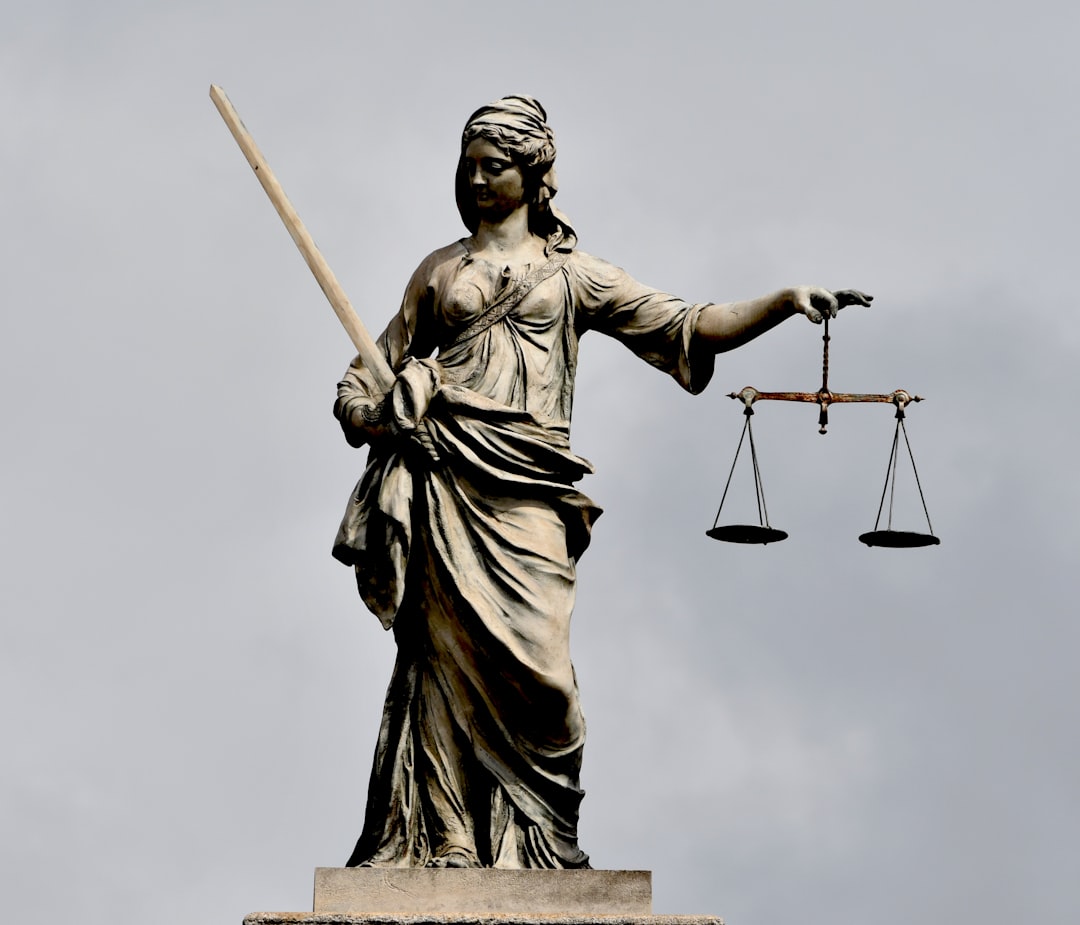
⚖️ Justice does not see with the eyes—it sees through evidence.